magdalena piwowar selected work cv ← back
flyr · ux/ui designer · 2022 — 2023

Revenue Operating System

An AI-powered platform that helps airlines forecast and optimize revenue across fares, ancillary products, and changing market conditions.

MY ROLE

UX/UI Designer

CROSS-FUNCTIONAL TEAM

PO, PM, Frontend, Backend

CUSTOMERS

Over 70 Airlines worldwide

the context

Airline revenue is shaped by more than the ticket price

Revenue teams work daily across changing demand, current bookings, schedules,
competitor pricing, and customer interest in ancillary products. These signals influence one another: a change to a fare can affect demand for seat selection, baggage, or bundled offers.

FLYR brings these sources of information together to forecast and optimize total revenue. The platform automates routine pricing decisions and gives analysts more time to focus on complex cases and market changes.

traditional rule-based workflow

ai-supported workflow

how data is used

traditional rule-based workflow

Analysts interpret booking history, forecasts,
and market signals across their workflows.

ai-supported workflow

AI analyses bookings, schedules, competitor prices, and demand for extra services to forecast revenue.

where analysts focus

traditional rule-based workflow

Analysts spend time reviewing markets and identifying where action may be needed.

ai-supported workflow

Automation handles routine decisions, while AI helps surface exceptions that may require human judgment.

how decisions are supported

traditional rule-based workflow

Analysts use their expertise to interpret data and decide what to change.

ai-supported workflow

AI recommendations and scenario comparisons help analysts choose when to step in.

the challenge

How do you trust a recommendation you can’t easily understand?

The platform processes thousands of pricing variables and market signals.
Showing all of them at once would add noise instead of helping revenue managers decide what to do.

The challenge was to make AI recommendations understandable and actionable: help analysts see what needs attention, understand the relevant context, and review or override a recommendation without slowing down their work.

MARKET SIGNALS
AI FORECAST
PRICING RECOMMENDATION
HUMAN REVIEW
DECISION
my role

Designing clear interactions for complex pricing workflows.

As a UX/UI Designer, I contributed to the design of revenue management workflows, from exploring user needs and mapping interactions
to prototyping, validation, and collaborating with engineering.

My work focused on helping revenue managers understand
AI-generated recommendations, identify exceptions, compare possible scenarios, and make or adjust decisions with confidence.

design approach

Put the decision first.
Keep the detail within reach.

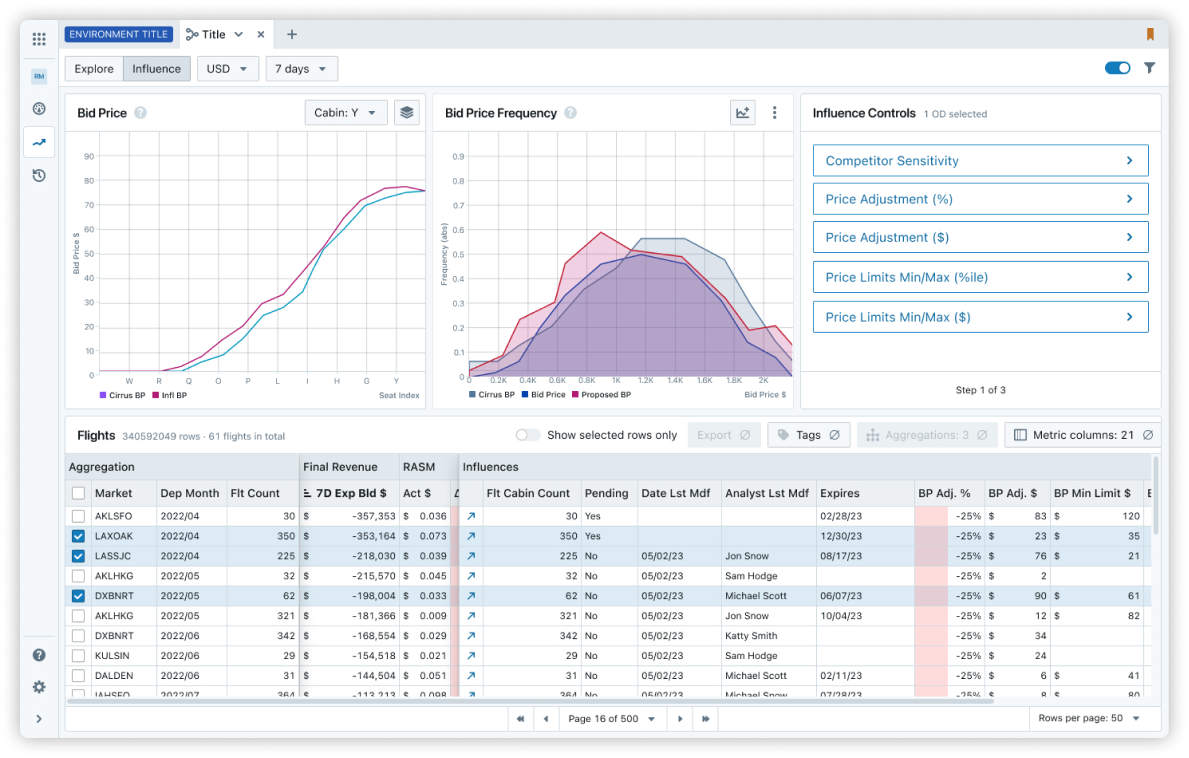
Instead of exposing raw metrics across thousands of variables, I helped structure the experience around actionable outliers - the cases that may need human judgment.

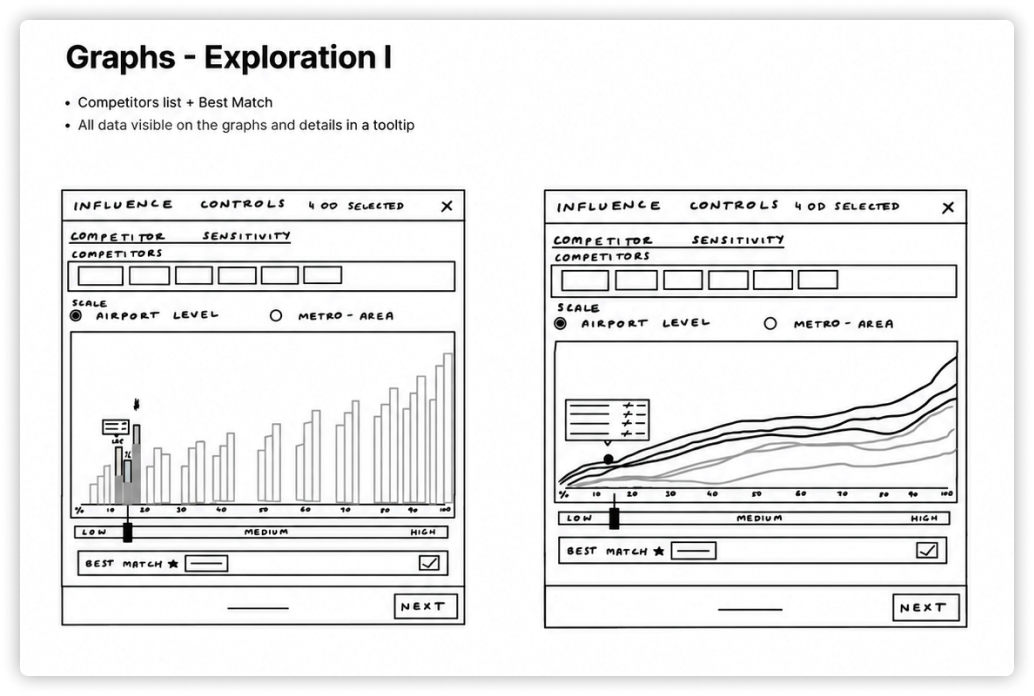
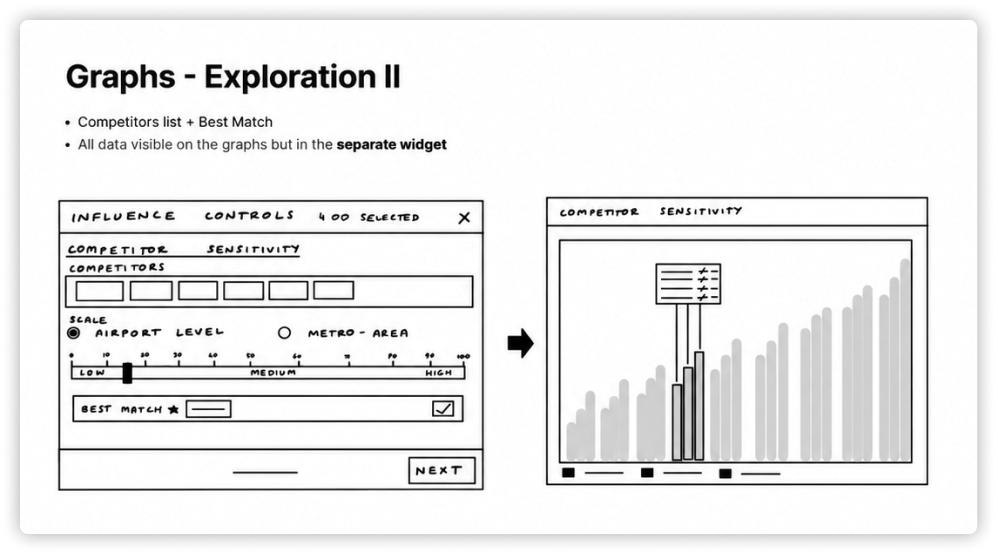
The AI handled standard pricing cases, while the interface guided analysts toward exceptions. The design included a clearer information hierarchy, confidence indicators, scenario comparisons, and override mechanisms with audit trails. This approach supported a shift from manually reviewing every pricing decision to exception-based management: analysts could focus on flights that needed attention while routine adjustments were handled automatically.

01 ⋅ understand

learn how analysts work and where complex workflows or large data volumes create friction across markets

02 ⋅ define

Frame the problem and identify which information and decisions need the most attention for airline teams

03 ⋅ design

design for airline revenue management, balancing industry needs, AI recommendations, and analyst control

04 ⋅ validate

test ideas with users, learn from feedback, and refine the experience for everyday revenue work at scale

from automation to action

Help teams focus where their judgment matters most

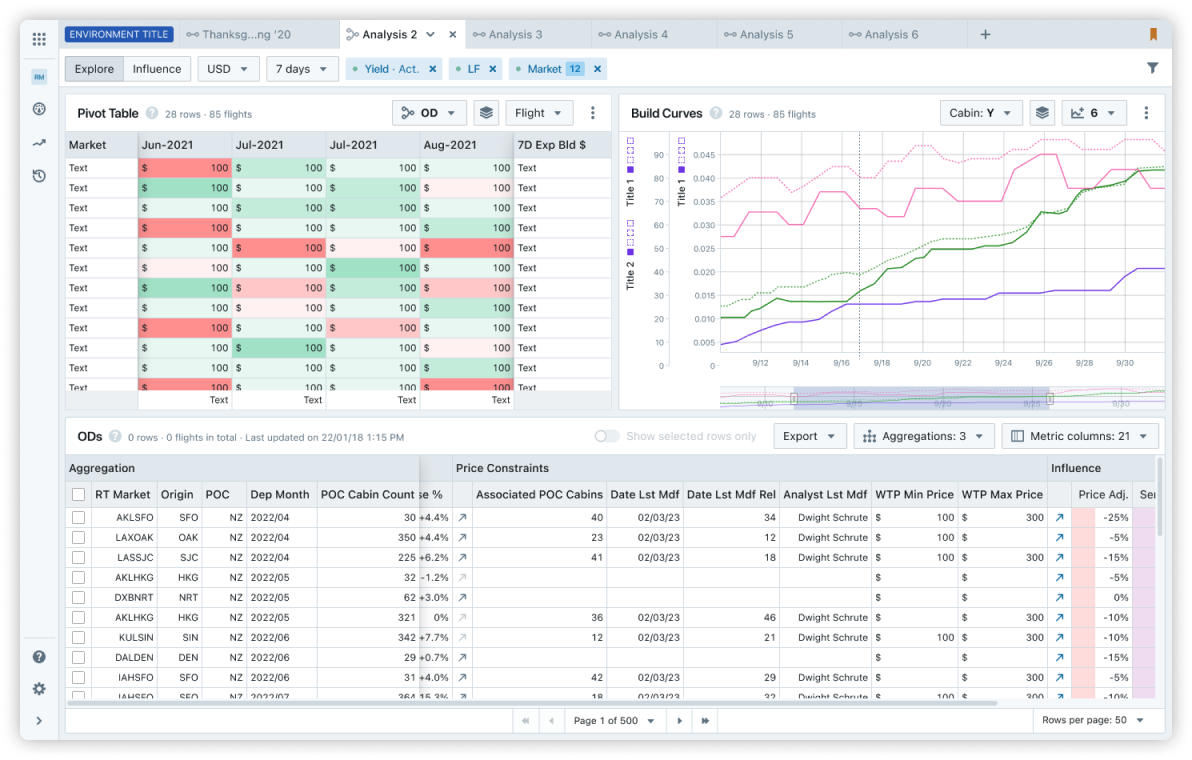
As a UX/UI Designer, I helped shape how revenue managers review and act on AI-generated pricing recommendations. I structured the workflow and designed interactions that make complex decisions easier to understand. Users can review a recommendation, compare scenarios, and adjust pricing when needed, while an audit trail keeps changes traceable.

FARES
FARE FAMILIES
ANCILLARIES
BUNDLES
TOTAL REVENUE
the outcome

Making AI-powered pricing easier to understand and manage

By bringing relevant signals and recommendations into a clearer workflow, the design helps revenue managers focus on exceptions instead of sorting through raw data. Scenario comparisons and visible override controls give teams more context and control when reviewing AI-supported decisions.

The result is an interaction model designed to make revenue optimization more usable in practice, supporting airline teams as they manage fares, ancillary products, and changing market conditions.