Comarch Asset Tracking: Enterprise IoT Cloud & Mobile Scanner Fleet
End-to-end UX architecture for spatial monitoring of industrial assets, real-time geofenced zones, and an ergonomic Android scanner companion engineered for low-light warehouse operators wearing protective gear.
Lead UX/UI Designer (From Inception to V1 & V2)
Product Discovery Team (PO, PM, Frontend, Backend, Hardware)
Zebra Rugged Terminals, BLE Beacons, RFID, GPS Collars
Cloud Web Platform, Industrial Android App, Design System
Asset lookup latency on warehouse floor
Glove-friendly physical touch targets
Industrial scanners & sensors managed
Global production deployment
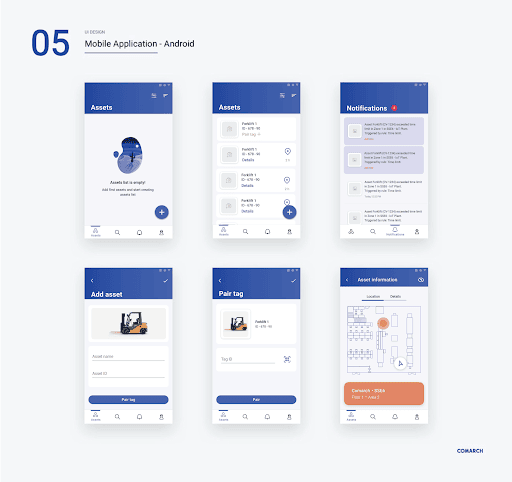
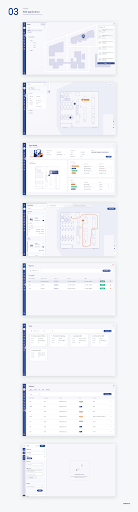
Figure 1.0 — Unified system architecture: Web cloud telemetry portal paired with dedicated rugged Android terminal companion
Tracking critical equipment across millions of square meters.
Comarch Asset Tracking is an enterprise cloud ecosystem built to locate and monitor heavy machinery, specialized diagnostic equipment, forklifts, and personnel across indoor manufacturing plants (e.g. SSE6, SSE7) and outdoor logistics yards.
The operational challenge was dual-faceted:
1. High-Density Facility Management (Web)
Dispatchers and facility directors require macro spatial analytics: tracking asset distribution across multi-story zones, setting up automated geofence rules (e.g., maximum dwell time in loading bays), and triggering automated safety alarms.
2. Floor Ergonomics & Protective Equipment (Mobile)
Warehouse operators handle heavy barcode/RFID scanner guns (Zebra) while wearing thick work gloves in cold, low-light environments. Complex multi-step digital forms are fatal to throughput.
Co-creating specifications with the Discovery Team.
As the sole UX/UI Designer embedded from day one, I partnered directly with the Product Owner, Product Manager, Lead Architects, and hardware engineers. My ownership spanned the entire discovery lifecycle:
Discovery Workshops
Facilitated recurring alignment workshops with department leads to define technical telemetry feasibility (BLE signal RSSI variance vs. GPS refresh rates).
Flowcharts & Rules
Mapped complex multi-state conditional logic: Zone Entrance, Zone Exit, Time Limit Warnings, and automated notification escalation chains.
Spatial clarity for massive industrial plants.
The web portal presents comprehensive spatial management. Dispatchers can inspect active assets on multi-tier plant blueprints, configure geofenced polygon zones, and review historical movement trails:
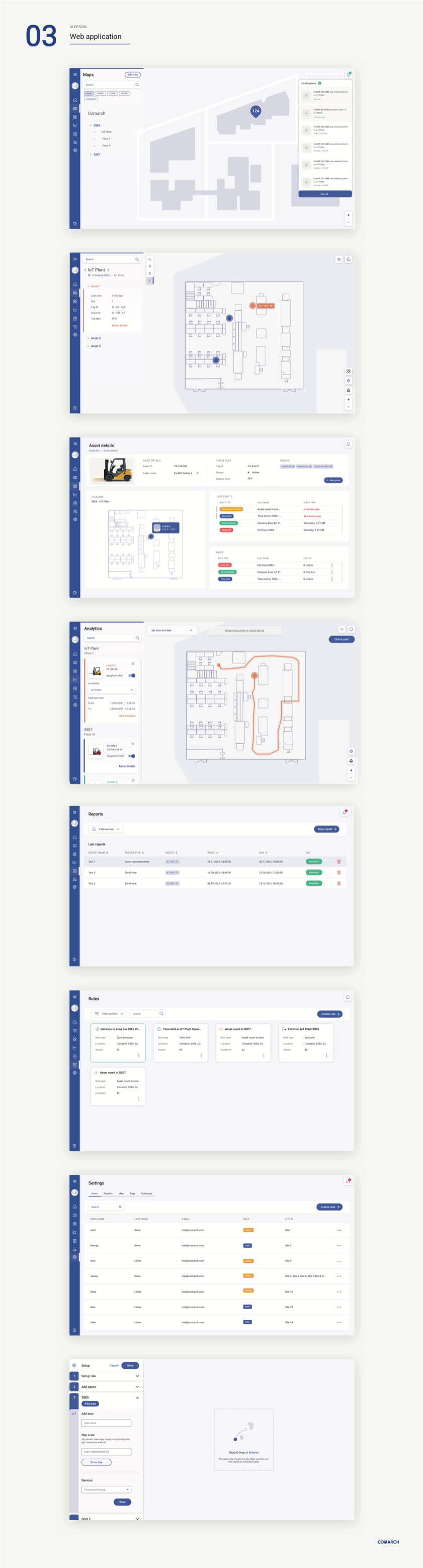
Figure 2.0 — Spatial zone editor, real-time telemetry maps, and event rule triggers
Automated Rule Engine Matrix
Users can construct granular automated policies without code:
Designed for thick gloves, dim warehouses & fast strides.
Operating a scanner while driving a forklift or walking through logistics corridors demands radical ergonomics:
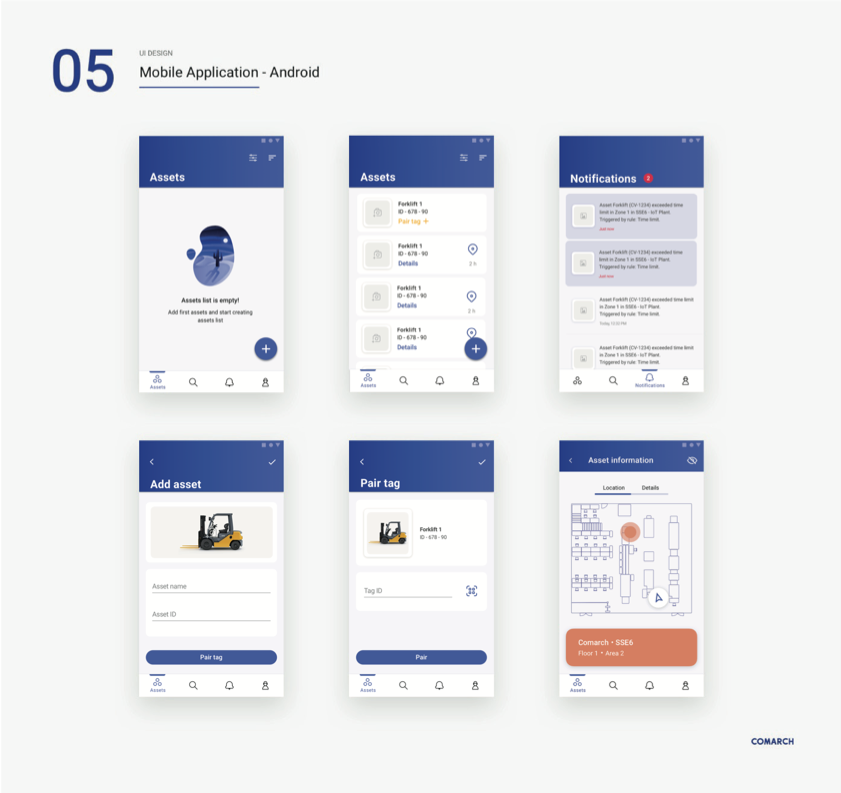
Figure 3.0 — Industrial Android flows: Empty state onboarding, asset list with instant status chips, 1-tap tag pairing, push notifications & indoor floor breadcrumb
Ensures instant contrast readability under harsh warehouse sodium lamps as well as glare on outdoor loading docks.
Reduced physical tag assignment from 6 cumbersome steps to a single hardware trigger pull: scan barcode ➔ instant NFC/BLE pair ➔ success confirmation.
Scalable tokens anchored in the Comarch Design System.
To bridge frontend and mobile engineers, I codified comprehensive UI specifications rooted in Comarch's corporate design tokens:
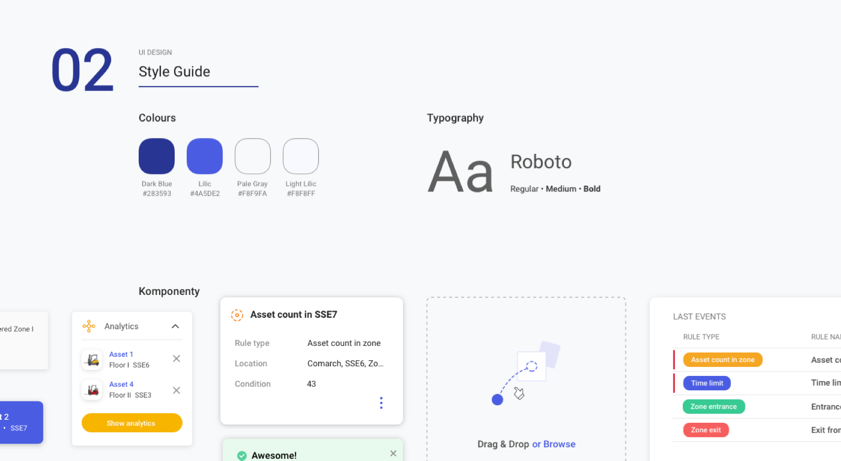
Figure 4.0 — Color tokens (#283593 Dark Blue, #4A5DE2 Lilac), Roboto typographic scales, and modular components
Enterprise software thrives on predictability, not novelty.
When warehouse operators process thousands of industrial shipments under tight shift deadlines, every extraneous animation or ambiguous icon is a direct cost. Success in enterprise IoT comes from ruthless elimination of friction and bulletproof alignment between digital screens and physical hardware.